
Success case
Sissi and Hungary: The Magnificent Life of Hungarian Aristocracy in the 17-19th Century — Kunming Stop
Yunnan Provincial Museum
- Location
- Kunming, China
- Duration
- 01/2018-05/2018
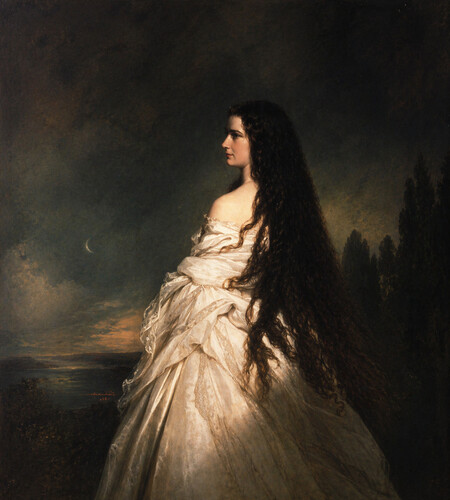
„Sissi and Hungary – the luxurious life of the Hungarian aristocracy in the 17-19th centuries” titled exhibition is based on carefully selected items from different collections from the Hungarian National Museum. It showcased more than 150 original artefacts in China to present how members of the Hungarian aristocracy lived their lives in those four centuries – starting from the late Middle Ages till the Habsburg era. This major "Sisi" exhibition started in Shanghai in June 2017 and concluded in Xian in 2018 after touring Shanghai, Beijing, and Kunming. The exhibition attracted over 2.7 million visitors by its closing.
Object number: 150
Venue size: 1000-1500 m2
Design Challenges The core challenge of this project was to use Empress Elisabeth of Austria (“Princess Sisi”) as a compelling point of entry while clearly conveying the broader historical context and Hungarian national culture behind her story. The exhibition needed to balance the legendary, emotionally engaging image of Sisi with historical authenticity, enabling visitors to gradually understand Hungary’s cultural identity and the socio-political environment of the Austro-Hungarian era.
At the Yunnan Provincial Museum, this challenge was intensified by spatial constraints that required a reinterpretation of the exhibition layout. Preserving narrative coherence while adapting to a different architectural environment—and restructuring visitor flow accordingly—made it more complex to maintain the intended balance between personal storytelling and broader historical context.
Design Strategy The project followed the curatorial logic of “a figure entering history,” positioning Sisi as the starting point of the narrative rather than its conclusion. The exhibition unfolds across four dimensions—the individual, the royal family, the nation, and culture—moving from personal story to historical context.
To respond to the spatial limitations, a modular and flexible design approach was implemented. While the four narrative layers remained intact, their physical arrangement was reconfigured to suit the venue, ensuring a coherent visitor journey from individual perspective to national and cultural understanding.
In terms of spatial expression, the design drew on elements from European court culture and Hungarian historical imagery. Through carefully orchestrated display rhythms, images, documents, and multimedia interventions, the exhibition maintained both visual continuity and narrative depth, even within a restructured environment.
Project Value The Kunming presentation demonstrated the adaptability and resilience of the exhibition concept.
By combining a strong narrative framework with flexible spatial design, the project successfully maintained both emotional engagement and historical clarity despite architectural constraints. Princess Sisi was transformed from a romanticized figure into a meaningful medium for understanding Hungarian history and cultural identity.
This case highlights how international exhibitions can remain both accessible and intellectually grounded, proving that well-structured storytelling and adaptable design strategies can effectively translate cultural content across diverse spatial and cultural contexts.