
Success case
Sissi and Hungary: The Magnificent Life of Hungarian Aristocracy in the 17-19th Century — Beijing Stop
Palace Museum in Beijing
- Location
- Beijing, China
- Duration
- 07/2017 - 09/2017
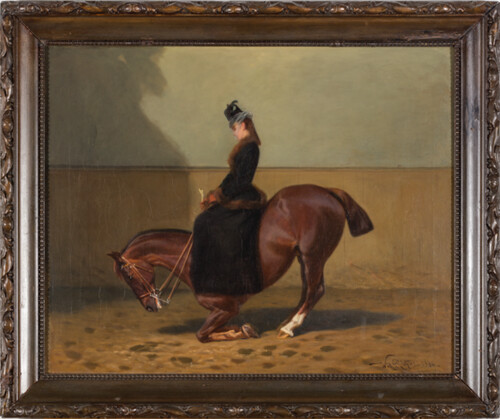
„Sissi and Hungary – the luxurious life of the Hungarian aristocracy in the 17-19th centuries” titled exhibition is based on carefully selected items from different collections from the Hungarian National Museum. It showcased more than 150 original artefacts in China to present how members of the Hungarian aristocracy lived their lives in those four centuries – starting from the late Middle Ages till the Habsburg era. This major "Sisi" exhibition started in Shanghai in June 2017 and concluded in Xian in 2018 after touring Shanghai, Beijing, and Kunming. The exhibition attracted over 2.7 million visitors by its closing.
Object number: 150
Venue size: 1000 -1500 m2
Design Challenges
In the Palace Museum, Beijing, the challenge evolved within a more formal and academically oriented museum environment. While the figure of Sisi remained a strong entry point, the audience expectation shifted toward deeper historical interpretation and clarity.
The key difficulty was maintaining emotional engagement while reinforcing the exhibition’s scholarly depth—ensuring that the narrative moved beyond the symbolic figure into a structured understanding of European political and cultural systems.
Design Strategy
The same “figure entering history” concept was retained, but with a stronger emphasis on interpretive clarity and narrative hierarchy. The four-dimensional structure—individual, royal family, nation, culture—was articulated more explicitly, allowing visitors to navigate complex historical relationships more easily.
Spatial design became more restrained and refined, aligning with institutional expectations, while still integrating symbolic elements of court culture. The balance shifted slightly toward content depth, supported by clear graphics and interpretive media.
Project Value
The Beijing presentation reinforced the exhibition’s credibility as both a cultural and educational project.
It demonstrated that a narrative driven by a historical figure could successfully support deeper academic engagement, strengthening cross-cultural understanding and highlighting the historical significance of Hungary within a broader European context.