
Success case
A Great Poet, the Pride of the Nation: Pushkin and the Echoes of the East
China Museum of Modern Press and Publication
- Location
- Shanghai, China
- Duration
- July 7–October 9, 2025
A Cross-Cultural Dialogue Through a Poet
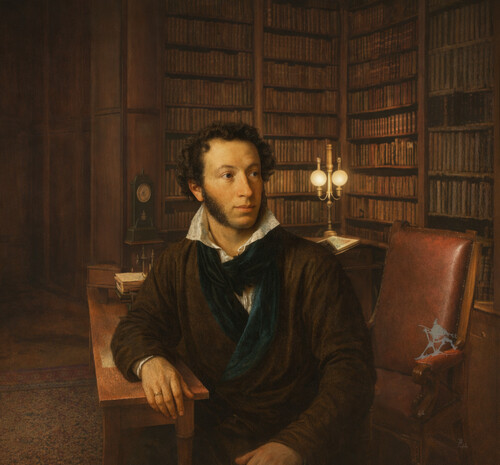
The Great Poet, the Pride of a Nation: Pushkin and Eastern Echoes
is a major international literary exhibition presented by the Museum of Modern Chinese Press and Publishing in 2025. Through manuscripts, books, artworks, and personal objects, the exhibition portrays Pushkin’s life, work, and enduring legacy, while also tracing his translation and reception in China. Featuring more than one hundred exhibits from Russian institutions, many shown in China for the first time, the exhibition highlights Pushkin not only as a foundational figure in Russian literature, but also as an important presence in Chinese literary memory. By connecting
“Pushkin and China” with the histories of translation, publishing, and reading, the project reactivates the cultural influence of a world literary classic within the museum space in Shanghai.
Highlights
- Centers on Shanghai’s first major Pushkin exhibition, unfolding a narrative of literature and history
- Features over one hundred precious objects from the All-Russian Pushkin Museum, presenting a multidimensional portrait of Pushkin’s life
- Organizes the exhibition into three sections: “An Extraordinary Life,” “Immortal Pages,” and “Distant Echoes”
- Connects Russian literature with the Chinese histories of translation and publishing through the section “Pushkin and China”
- Enhances public engagement and literary communication through interactive elements and supporting programs
- Transforms an international literary exhibition into a more accessible cross-cultural reading event
Design Challenge
The core challenge of this project was how to present the significance of a Russian literary classic within a Chinese context, and guide audiences from the familiarity of a well-known poem toward a deeper understanding of literary transmission.
Although Pushkin is widely recognized in China through works such as If Life Deceives You, public understanding of his life, literary position, intellectual character, and cultural connection with China often remains limited. The exhibition therefore needed to move beyond quotation and commemoration, building a clear narrative that leads visitors from the figure of the poet into the broader contexts of Russian literary tradition, history, and Sino-Russian cultural exchange.
At the same time, as the exhibition is housed in the Museum of Modern Chinese Press and Publishing, the project also had to address how Pushkin entered China. It not only tells the story of Pushkin himself, but also of how his works became part of modern Chinese reading experience through translation, publishing, and circulation, turning an international literary subject into a public cultural narrative aligned with the museum’s identity.
Design Strategy
Centered on the concept of “Pushkin and Eastern Echoes,” the project frames the exhibition through four interwoven dimensions: life, literature, cultural transmission, and Chinese reception. Organized into three sections—An Extraordinary Life, Immortal Pages, and Distant Echoes—the exhibition moves from Pushkin’s personal history and literary world to his translation, reception, and enduring resonance in China, creating a clear and accessible narrative path.
In terms of content, the project combines original documents and objects from Russia with the modern Chinese histories of translation and publishing. It presents not only Pushkin himself, but also how he was read, translated, and understood in China. From Chinese editions of The Captain’s Daughter to the engagement of figures such as Lu Xun and Qu Qiubai, the exhibition turns the transnational circulation of a literary classic into a visible and understandable narrative.
Spatially, the project adopts a three-dimensional narrative with multidimensional interaction, bringing together manuscripts, books, paintings, sculptures, publications, multimedia, and public programs. In this way, poetry is transformed from text into lived cultural experience—something visitors can read, hear, compare, and feel—while entering both Pushkin’s literary world and the historical echoes of Sino-Russian cultural exchange.
Project Value
The significance of this project lies in using a world literary classic to build an exhibition narrative that is at once literary, communicative, and publicly engaging.
Within the framework of the Museum of Modern Chinese Press and Publishing, Pushkin is presented not simply as a figure from textbooks or famous quotations, but as a cultural bridge linking Russian literary tradition, the modern Chinese histories of translation and publishing, and contemporary reading experience. Through the coordination of objects, documents, translation history, and spatial storytelling, the project shows how poetry can cross languages and borders and continue to resonate in a different cultural context.
The exhibition also demonstrated strong public impact. By the close of the show, it had received around 100,000 visitors, launched 13 supporting programs, and generated wide media attention. More than an imported international literary exhibition, it became a public cultural event that moved Sino-Russian exchange from display toward understanding and shared cultural engagement.