
Success case
Sound of China - Exhibition of Guqin from Chongqing Three Gorges Museum
Museum of Ethnography, Hungary
- Location
- Budapest, Hungary
- Duration
- 03/2025-06/2025
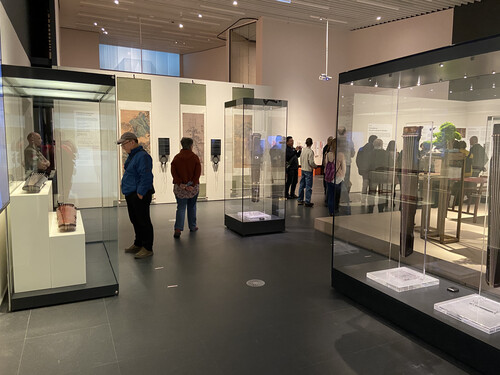
As a result of the cooperation between the Chongqing Three Gorges Museum and Back and Rosta, two complementary exhibitions of ancient Chinese musical instruments opened in Hungary in 2025. On March 21, 2025, the Museum of Ethnography launched a temporary exhibition entitled “Sound of China – Exhibition of Guqin from the Chongqing Three Gorges Museum”, which was presented alongside the museum’s existing zither exhibition. In addition to these two exhibitions, the Museum of Ethnography also organized several concerts and related programs for visitors. The guqin exhibition displayed 21 ancient and highly unique instruments until the end of June 2025.
Design Challenges
The core challenge of this project is how to use a relatively static traditional musical instrument as a point of entry while effectively conveying the sound culture, aesthetic system, and spiritual traditions that underpin it. The value of the guqin lies not merely in the instrument itself, but in the musical concepts, scholarly cultivation, and symbolic significance within traditional Chinese culture that it embodies. For Hungarian audiences, the guqin holds an exotic cultural appeal, yet also presents a certain barrier to understanding.
Consequently, the project must strike a balance between the physical display of the instrument and the imagination of its sound, as well as between historical knowledge and public perception, enabling visitors to progress from “seeing the guqin” to a deeper understanding of “traditional Chinese culture.”
Design Strategy
The project adopts “From Instrument to Sound, From Guqin to China” as the core logic of its exhibition design, positioning the guqin as the starting point—rather than the endpoint—of the exhibition’s narrative. The exhibition unfolds across several layers: the instrument itself, music, literati culture, and cultural spirit. It begins with the guqin’s form, materials, and craftsmanship, gradually expanding to explore its cultural significance within traditional Chinese music, the lives of literati, and aesthetic concepts.
In terms of spatial expression, the design draws upon the visual language of the guqin and traditional Chinese study culture. Through key exhibits, graphic systems, multimedia aids, and atmospheric design, it creates an exhibition environment that embodies Eastern aesthetics, historical texture, and a rhythmic viewing experience. In this way, the traditionally static display of artifacts is transformed into a multi-layered cultural experience, allowing visitors to immerse themselves in China’s traditional sound culture and spiritual world while viewing the guqin.
Project Value
The significance of this project lies in establishing a more accessible pathway for the cross-cultural dissemination of Chinese culture through the guqin, a highly representative traditional Chinese artifact. Within the framework of the Hungarian Ethnographic Museum, the guqin is no longer merely an Oriental musical instrument to be viewed, but becomes a vital medium for understanding Chinese musical traditions, aesthetic spirit, and cultural memory.
Through the synergy of narrative, space, and media, the project transforms the exhibition of traditional Chinese artifacts from a simple display of cultural relics into a cultural understanding, further expanding the expressive possibilities of international exhibitions in the realms of music, artifacts, and the dissemination of Eastern culture.