
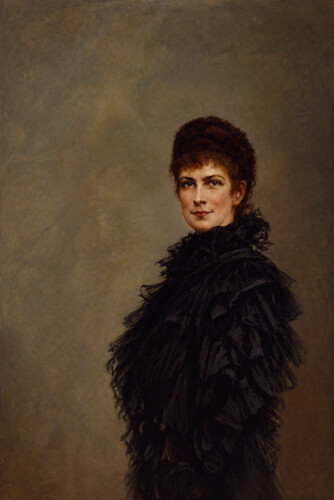
Success case
Sissi and Hungary: The Magnificent Life of Hungarian Aristocracy in the 17-19th Century — Shanghai Stop
Shanghai Museum
- Location
- Shanghai Museum (People's square building)
- Duration
- 06/2017-09/2017
„Sissi and Hungary – the luxurious life of the Hungarian aristocracy in the 17-19th centuries” titled exhibition is based on carefully selected items from different collections from the Hungarian National Museum. It showcased more than 150 original artefacts in China to present how members of the Hungarian aristocracy lived their lives in those four centuries – starting from the late Middle Ages till the Habsburg era. This major "Sisi" exhibition started in Shanghai in June 2017 and concluded in Xian in 2018 after touring Shanghai, Beijing, and Kunming. The exhibition attracted over 2.7 million visitors by its closing.
Object number: 150
Venue size: 1000 -1500 m2
Project Challenges
The core challenge of this project was how to use Empress Elisabeth of Austria (“Princess Sisi”) as a point of entry while clearly conveying the broader historical context and Hungarian national culture to a largely unfamiliar audience.
As a widely recognized cultural icon, Sisi is often perceived as a romantic and elegant royal figure. However, she is also deeply connected to the complex political landscape of Europe, the courtly cultural system, and Hungarian history. The risk at this introductory venue was that visitors might engage only with the persona, without reaching deeper historical understanding.
The challenge, therefore, was to balance emotional appeal with historical authenticity—creating an accessible yet structured narrative that would guide visitors into the complexities of Hungarian identity and history.
Design Strategy
The exhibition followed the curatorial concept of “a figure entering history,” positioning Sisi as the narrative gateway rather than the final focus.
Content was structured across four dimensions—individual, royal family, nation, and culture—beginning with Sisi’s personal life and expanding toward her relationship with Hungary and the Austro-Hungarian context.
Spatially, the design emphasized immersive storytelling: visual richness, strong scenography, and atmospheric elements inspired by European court culture created an engaging first encounter. Multimedia and layered interpretation helped bridge cultural distance, ensuring accessibility for a broad audience.
Project Value
As the opening venue, Shanghai established a compelling and public-friendly framework for communicating Hungarian history abroad.
The exhibition successfully transformed Sisi from a romantic icon into a narrative bridge toward deeper cultural understanding. It introduced audiences to the collections of the Hungarian National Museum in a way that was both emotionally engaging and intellectually meaningful, setting the tone for the entire tour