
Success case
Exhibition Design: "Through Budapest: The City and Its Cultural Legacy Through History"
Shangrao Museum
- Location
- Shangrao, China
- Duration
- January 8–March 1, 2026
Reframing Urban Civilization Through Exhibition Narrative
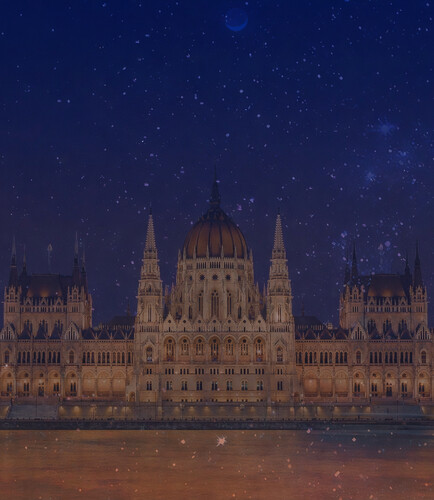
Through Budapest: City and Cultural Guardianship Along the River of History is an exhibition design project centered on the spatial translation of a World Heritage city. Structured around the themes of city, history, and guardianship, it transforms Budapest’s development—from early settlement and the Roman era to medieval rule and modern urban civilization—into a clear exhibition narrative through thematic chapters, visual hierarchy, and key display moments.
Within the museum context, the design goes beyond presenting artifacts and historical information. It turns urban history, civilizational development, and heritage value into a spatial experience through the coordination of objects, historical images, narrative interfaces, and multimedia. In this way, the exhibition creates a layered and accessible environment in which visitors gradually understand Budapest as a city shaped by multiple histories and enduring cultural meaning.
Design Highlights
- Organizes the exhibition around the evolution of urban civilization within a World Heritage framework
- Translates artifacts, images, and historical information into a clear exhibition language
- Uses a chapter-based structure to articulate the layered histories of Budapest’s multiple civilizations
- Reinforces spatial order through key interfaces and carefully staged exhibition nodes
- Presents urban memory and heritage value as a form of public expression in a cross-cultural context
- Creates an exhibition environment that combines historical depth, spatial rhythm, and immersive experience
*]:pointer-events-auto scroll-mt-[calc(var(--header-height)+min(200px,max(70px,20svh)))]" dir="auto" data-turn-id="request-WEB:49201e87-6220-4440-a905-082819d5de3b-66" data-testid="conversation-turn-134" data-scroll-anchor="true" data-turn="assistant">
*]:pointer-events-auto scroll-mt-[calc(var(--header-height)+min(200px,max(70px,20svh)))]" dir="auto" data-turn-id="request-WEB:49201e87-6220-4440-a905-082819d5de3b-70" data-testid="conversation-turn-142" data-scroll-anchor="true" data-turn="assistant">
Design Challenge
Exhibitions on World Heritage cities often span long timelines, complex layers of civilization, and diverse cultural structures. The core challenge of this project was how to clearly present Budapest’s development—from early settlement and the Roman era to medieval rule, Ottoman influence, and modern European civilization—within a limited exhibition space.
For local audiences in Shangrao, Budapest carries both cultural appeal and a certain distance of familiarity. The exhibition therefore needed to move beyond the display of foreign artifacts alone, and instead provide a clear narrative and spatial structure that would help visitors quickly grasp the city’s historical logic, heritage value, and civilizational continuity.
At the same time, as Shangrao’s first major international artifact exhibition, the project also carried a symbolic role in public cultural exchange. The design thus had to balance academic depth, public accessibility, and the broader significance of intercultural communication.
Design Strategy
The project is built around the concept of “Through Budapest,” presenting the city as a historical landscape shaped by river, power, trade, religion, and everyday life. Rather than following a simple chronology, the exhibition reorganizes Budapest’s development into a spatial narrative that guides visitors from artifacts to the city, and from the city to a broader understanding of cultural heritage.
In terms of content, the exhibition combines artifacts, historical information, and visual media to reveal the continuity and layering of different civilizations. Through a chapter-based structure, visitors move from individual objects to a clearer understanding of Budapest as a World Heritage city shaped by cultural diversity and long historical evolution.
Spatially, the design integrates objects, images, and narrative interfaces to turn the idea of a city along the river of history into a layered on-site experience. The gallery becomes not only a space for display, but a path through civilization, allowing visitors to sense historical change and cultural continuity as they move through the exhibition.
Project Value
The significance of this project lies in establishing a more public-facing mode of cross-cultural exhibition through an international artifact exhibition.
Within the framework of the Shangrao Museum, Budapest is no longer presented simply as a distant European capital, but as a model of urban civilization that can be understood through artifacts, city history, and cultural heritage. Through Budapest’s historical development, the exhibition invites visitors to reflect on how cities take shape over time, how culture is preserved through material remains, and how World Heritage can become a shared public language across regions.
Through the coordination of exhibition narrative, artifact display, and spatial experience, the project transforms the history of a foreign city from knowledge-based introduction into a more accessible cultural experience, while also expanding the museum’s role in international cultural cooperation, regional exchange, and public education.